An EOB, or Explanation of Benefits, is a document from a health insurance company that details how a medical claim was processed. It explains what the insurance company paid, what the patient owes, and provides information on the services provided, the provider, and the total cost. An EOB is not a bill, but it helps you understand your financial responsibility after a service.
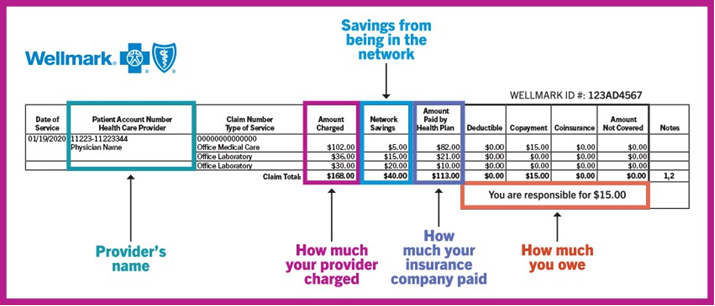
Explanation of Benefits (EOB) statements can vary from one insurance carrier to another in both layout and terminology—each carrier uses its own format, wording, and level of detail to explain claim processing and payment information (see sample below).
What an EOB includes
- Provider and service information: The name of the healthcare provider, the date the service was received, and a description of the treatment.
- Billed charges: The total amount the provider billed for the service.
- Insurance payment: The amount the insurance company paid on your behalf.
- Patient responsibility: The amount you are responsible for, which may include copayments, coinsurance, or deductible costs.
- Deductible summary: Information on how much of your deductible has been met for the year.
Why an EOB is important
- It is not a bill: It is a statement from your insurer, not a request for payment. You will receive a separate bill from the provider for the amount you owe.
- It helps with billing accuracy: You should review the EOB to make sure you received the services listed and that the claim was processed correctly.
- It tracks your benefits: EOBs help you keep track of your out-of-pocket costs, how much of your deductible has been met, and your year-to-date spending.
Was this article helpful?
That’s Great!
Thank you for your feedback
Sorry! We couldn't be helpful
Thank you for your feedback
Feedback sent
We appreciate your effort and will try to fix the article